
Recipes from the Nandi Majumdar/ Chaudhuri family
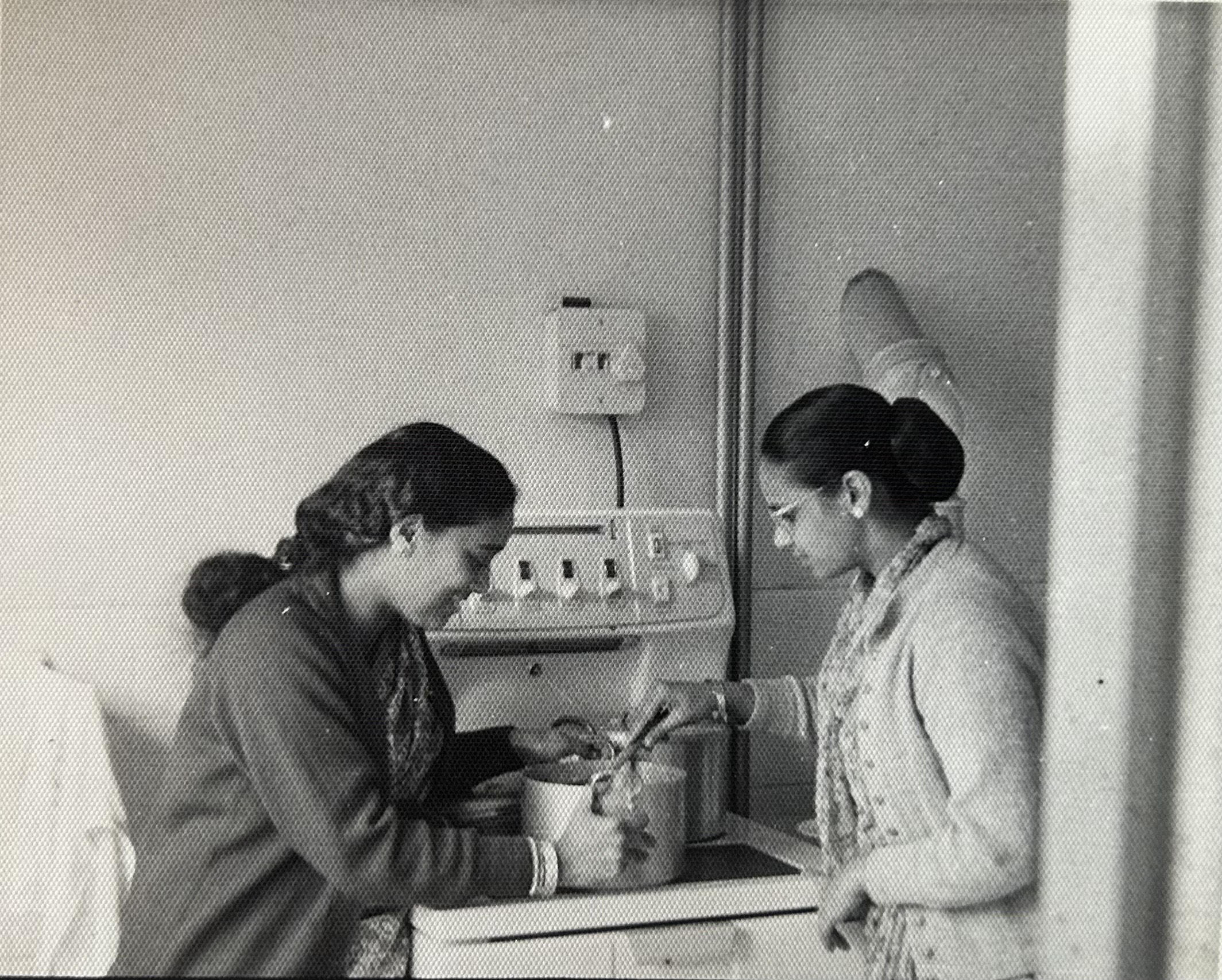
Bijoya Chaudhuri was – as everyone knew, from relatives to musicians to foreign diplomats – a cook of extraordinary gifts. She inherited her repertoire from her mother, Sailabala Nandi Majumdar, a genius of a cook, whom she learnt from and helped in the kitchen in Sylhet, as did her older sister, Usha Purakayastha, who was also a great cook besides being a teacher of English in Hailakandi Girls’ School in Assam.
Bijoya perfected this repertoire and extended it significantly. For instance, tak mishti begun (sweet and sour aubergine) is her invention, created after she tasted something similar somewhere and decided to recreate it in her own way: it remains famous and much-discussed to this day. Tomato murgi (tomato chicken) was brought into existence relatively late in her life, with an ingredient (tomatoes) she didn’t have much time for: it was made for her granddaughter Aruna’s delectation, and to mark a visit to the Calcutta Zoological Gardens in the early 2000s in the winter. The once-dismissed tomato was used again, late in life, to create the wonderful tomato phulkapi (tomato cauliflower).
Her recipes were collected in the book Rannagharer Saat Kaahan (The Kitchen’s Seven Stories) and published by Ananda Publications in 2009. Woven into the recipes are conversation, anecdote, reminiscence, and observation: Bijoya loved talking – it was her, for her, inseparable from existence, as food was.
Some Bengali excerpts appear below (courtesy Ananda Publishers), as do English translations by Chitralekha Basu for an English version published in the USA by Amazon, commissioned by her nephew Dev Purkayastha.
English translation of the three recipes
Morola Fry
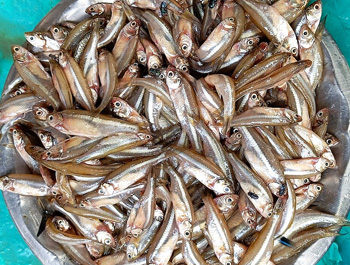
These small freshwater fish
that are eaten whole – head, tail,
backbone, not to speak of the flesh,
are fried in hot oil,
four or five held together
in a binding of chopped onions and flour
which apparently sews them together into islands
from which their crowded eyes stare like jewels.
Morola Fritters
The fish are a shiny translucent white in colour, and smaller in size than my little finger. When I see the tiny morola (whitebait) staring at me without batting their minuscule eyelids, I remember the poem Morola Fry from my son Amit’s book, St. Cyril Road and Other Poems, written years ago. In it the process of cooking morola fritters is described in more or less exact detail. So I thought I would include the poem in my book. Here’s the recipe.
Ingredients: Morola 100 gm, onions (julienned, equal to the fish in volume), green chillies (finely chopped) 1, salt, refined wheat flour 1 and ½ tbs, a little more, if required.
Recipe: Squeeze out the impurities inside each fish’s tummy. Rinse them thoroughly. Change the water a few times. Add onions, chopped green chilli, salt and refined wheat flour. The wetness left on the fish after washing will help bind the flour and the rest of the ingredients together. Now put the onion and flour batter on little clusters of fish in a way that makes each cluster stick. Mould into small, flat shapes. Place a small wok on high heat and pour enough oil to make the fritters float while frying. Turn the fritters over a few times to make sure both sides are evenly fried and crunchy. And, oh, I forgot to mention something at the beginning. In Sylhet, we call morola ‘maka’.
Kellner-style Chicken
When I was a young girl living in Sylhet, we would sometimes visit Shillong. We took a bus run by Sree Lakshmi Motor Services at 10 or 11 AM. Tamabil was the first stop, followed by Dawki. And then, after travelling across a rather longish distance, we reached a place called Pynursla.
A chill would set in at this point, so here’s where we would put on warm clothes. The bus stopped here for a while, allowing the passengers to stretch their limbs and perhaps grab a snack.
There were two or three restaurants, among which Kellner was very well-known. I remember having eaten there a few times. The food—steamed fine rice, and a chicken dish with gravy—would be served in sparkling clean white ceramic containers. I still remember the taste of that dish and the pleasure we had sampling it then. Sylhet, Kellner’s restaurant and the chicken dish served there—all of these are now consigned to a page in my memory. However, I have tried to make Kellner-style chicken at home. The dish comes with a thin red highly-aromatic gravy. Here’s the recipe in detail.
Ingredients: Fine-quality broiler chicken 8-9 pieces, onions (large, cut into thin slices) 1 and ½, garlic (crushed) 1 tsp, ginger juice 2 tbs, garam masala – cinnamon sticks (small) 2, cardamoms (slit on top) 4, cloves 4, bay leaves 2-3, Kashmir dry red chilli powder 1 and ½ tbs, turmeric powder 1 tbs, vegetable oil mixed with mustard oil 6 tbs, ghee (solid) 1 tsp, salt, sugar 1 tsp.
Recipe: Put a medium-size sauce pan on very high heat. Pour the mixture of vegetable and mustard oil and after the oil starts boiling add garam masala, crushed garlic and sliced onion. Stir a little. Turn down the heat and add turmeric powder and red chilli powder. Increase the heat. Keep sprinkling water as the spices fry in hot oil. Add chicken when the spices give off a nice aroma. Use a spatula to toss and turn the ingredients and stir them well. Now turn down the heat. Cover and keep on low heat for a while. The chicken will release water soon afterwards. Take off the lid from time to time and stir. When the water is almost completely evaporated, add ginger juice. Turn up the heat and stir continuously so that the remaining moisture dries up as well. Now add 2 cups of very hot water. When the broth starts bubbling vigorously, cover the pan and keep it on medium heat for 15 min. Now turn down the heat even further and have the chicken steamed on low heat. This will take a few minutes. Add sugar.
To this day, whenever I have piping hot chicken in a gravy with steamed rice, I’m reminded of the meals we had at Kellner.
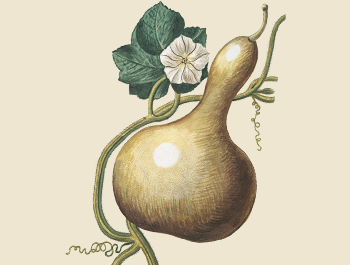
Lau Moong/Bottle Gourd with Moong Lentils
Ingredients: Bottle gourd 1 and ½ kg. moong daal 3 tbs, vegetable oil 4-5 tbs, ghee 2 tsp (heaped), cumin paste (cumin powder ground once with water) 2 tbs, ginger paste 1 tbs, coriander leaves 1 sprig, lentil nuggets, fenugreek seeds, cumin seeds, bay leaves 2, turmeric powder ½ tsp, salt, sugar 2 heaped tsp
Recipe: Dry roast moong daal in a wok until they turn light brown. Finely chop bottle gourd (lau) after peeling off the skin. Take a clean, fresh, wide-brimmed wok, pour vegetable oil and put on high heat. When the oil is heated thoroughly, add ghee. Add a few fenugreek and cumin seeds for tempering. When they have finished spluttering, turn the heat down. Add washed chopped bottle gourd, kept in a colander to drip dry. Add bay leaves, turmeric powder and salt as required. Stir well and cover. The vegetable will release a lot of water. Add roasted pulses of the moong daal. Cover and let it cook for about 15 min until the moong is almost done. Add cumin and ginger paste. Stir well to blend the spices with lentils and bottle gourd. Take the lid off to let the water evaporate. When the mix of bottle gourd and red moong pulses is boiled to the point of sticking to the pan, add sugar. Heat a little ghee in a fresh wok. Roast four green chillies, take them out and set aside. Add to the moong and bottle gourd mix. Garnish with chopped coriander leaves, (which would turn brown when done), and roasted green chillies, just before serving.
As I was writing down this recipe I remembered an incident. Some time ago, former West Bengal governor Gopalkrishna Gandhi and his wife came to dinner at ours. Mrs Tara Gandhi loved this dish. She asked me what the vegetable in it was. I told her it was what Hindi-speaking people called ‘lauki’. She said, ‘I could never guess how a vegetable as plain as lauki can be turned into something so delicious.’
Therefore, you who are reading this, do not ignore the humble Lau Moong.
Translated by Chitralekha Basu